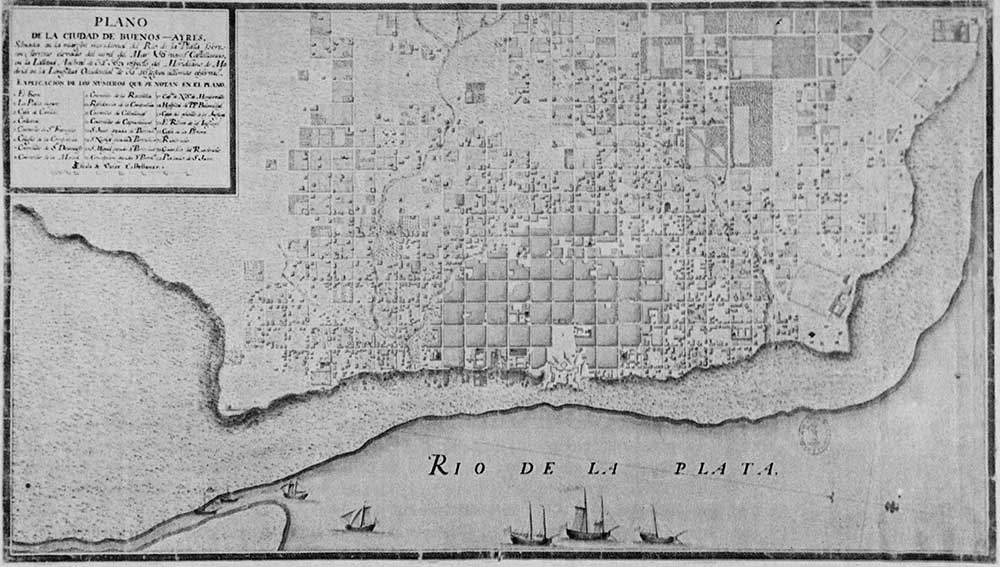
Figures and paradigms
The forms of Buenos Aires (1740-1860)
Keywords:
Buenos Aires, urban history, urban grid, cartographyAbstract
Halfway the XIX century a new romantic sensibility questioned the traditional square grid of the Latin-American city, assimilating it to the hispanic past and to backwardness. This negative view however, was not universal; in fact, in those years the extensions of cities, especially European, were designed according to geometric patterns which were weighted positively. A similar spirit directed the actions of local professionals, who applied methods of organization and control of space based on the elementary geometry of the grid and on statistical quantification. This diverse range of attitudes highlights the historical complexity of a spatial and symbolic form whose "naturalness" is debatable. We approach this problem by shifting from the question about the origins of the regular grid to its persistence and ductility over time, with an emphasis on the practical dimensions and techniques that allowed the deployment of regularity in Buenos Aires. This approach helps to put forward a long history that reveals changing conditions, meanings and practices through which the order of the city arose, from the foundational cycle perfect grid to the adoption of a modern instrumental web that helped to address and conduct the processes of metropolitan growth.
Downloads