
Earthen building technology in the conformation of the frontier landscape of the Argentine State during the XIXth century and early XXth
Keywords:
ArgentinaAbstract
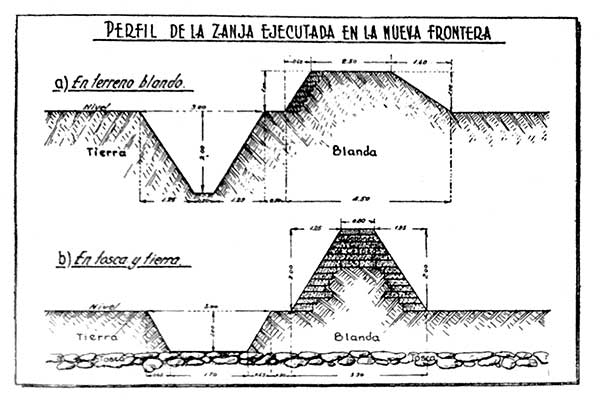
The concern about the control and expansion of the internal border acquired centrality in the Argentine state from the moment of its independence. The frontier space that was established during the colonial period became more complex with the republican period until reaching the total disarticulation of the indigenous communities. This space allowed the establishment of several connection dynamics between both societies, some peaceful and others not so much, forming a cultural landscape different from that which could be found within both territories in contact. The work identifies the technological forms used in the physical construction of the frontier space, understood as such, the organizational modalities, the materials and construction techniques, the social groups and the availability of resources. It was observed that in the physical materialization, specific technological forms were used that made an intensive use of the knowledge about the technologies of earthen building.
Downloads
References
Blengino, V. (2005). La zanja de la Patagonia. Los nuevos conquistadores: militares, científicos, sacerdotes y escritores. Buenos Aires, Argentina: FCE.
Bernand, C. (2016). Los indígenas y la construcción del Estado-Nación. Argentina y México, 1810-1920: historia y antropología de un enfrentamiento. Buenos Aires, Argentina: Prometeo.
Boccara, G. (2003). Fronteras, mestizaje y etnogénesis en las Américas. En R. Mandrini y C. Paz (comps.), Las fronteras hispanocriollas del mundo indígena latinoamericano en los siglos XVI-XIX. (pp. 63-108). Buenos Aires, Argentina: CEHiR/UNS/IEHS.
Castilla, M. (2018). Territorios y fronteras: procesos de apropiación del espacio simbólico y geográfico en las comunidades indígenas de Pampa del Indio, Chaco. Boletim do Museu Paraense Emílio Goeldi. Ciências Humanas, 13(3), pp. 541-560.
Gómez Romero, F. y Spota, J. (2006). Algunos comentarios críticos acerca de 15 años de arqueología en los fortines pampeanos. Relaciones de la Sociedad Argentina de Antropología, 31, pp. 161-185.
Guerci, N., Mugueta, M. y Rodríguez, M. (2004). La arqueología histórica en Argentina. El caso del cantón Tapalqué viejo. Gazeta de Antropología, 20, artículo 21.
Ingold, T. (1993). The temporality of the landscape. World archaeology, 25, pp. 125-174.
Gustavsson, A. (2016). Prácticas de exploración y colonización. Relatos de Mauricio Jesperson sobre el Gran Chaco durante la primera mitad del siglo XX. Folia Histórica del Nordeste, 27, pp. 39-62.
Langiano, M. y Merlo, J. (2013). Camino de los indios a Salinas: arqueología y paisaje en la Frontera Sur (Provincia de Buenos Aires 1850-1880). Anuario de Arqueología, 5, pp. 169-88.
Lanteri, S. y Pedrotta, V. (2012). Territorialidad indígena y expansión estatal en la frontera bonaerense (segunda mitad del siglo XIX): entre el discurso oficial y la realidad material. Revista Española de Antropología Americana, 42(2), pp. 425-448.
Leoni, J., Tamburini, D., Acedo, T. y Scarafia, G. (2013). Fortificando el desierto: la transformación del paisaje pampeano en el territorio del actual partido de Carlos Casares, 1869-1877. Anuario de Arqueología, 5, pp. 149-168.
Martín, M., De Paula, A. y Gutiérrez, R. (1976). Los ingenieros militares y sus precursores en el desarrollo argentino (hasta 1930). Buenos Aires, Argentina: Editorial Américalee.
Nacuzzi, L. (2010). Introducción. En C. Lucaioli y L. Nacuzzi (comps.), Fronteras: espacios de interacción en las tierras bajas del sur de América. (pp. 7-19). Buenos Aires, Argentina: Sociedad Argentina de Antropología.
Page, C. (2012). Las reducciones-fuertes de los jesuitas en el Chaco. Historia y tipología de un emplazamiento urbano devenido en legado inmaterial. Recuperado de: https://studylib.es/doc/5827324/las-reducciones-fuertes-de-los-jesuitas-en-el
Panizza, M. (2015). El área de Ventania en la conformación de la línea de frontera durante el siglo XIX. Cambio y diversidad cultural en la apropiación del paisaje. Revista TEFROS, 13(2), pp. 83-107.
Rochietti, A., Olmedo, E. y Rivero, F. (2013). Arqueología de la frontera: los vestigios de una sociedad de las pampas. Buenos Aires, Argentina: Aspha Ediciones.
Rolón, G., Olivarez, J., Dorado, P. y Varela Freire, G. (2016). Las construcciones del espacio domiciliar y peridomiciliar rural como factores de riesgo de la enfermedad de Chagas. Construcción con Tierra, 7, pp. 57-68.
Rostagno, E. ([1912]1969). Informe Fuerzas de Operaciones en el Chaco 1911. Talleres Gráficos-Arsenal Ppal. de Guerra.
Sánchez Negrette, A (1985). Tres períodos en la arquitectura maderera de Corrientes. Revista Summa Colección Temática, 2, pp. 16-19.
Spota, J. C. (2009). Los fortines en la frontera chaqueña (1862-1884). Un enfoque desde la antropología histórica en relación con la teoría de las organizaciones. Memoria americana, 17(1), pp. 85-117.
Thomas, H. y Santos, G. (2016). Introducción. Tecnologías para incluir: marco analítico-conceptual. Tecnologías para incluir. Ocho análisis socio-técnicos orientados al diseño estratégico de artefactos y normativas. (pp.13-48). Carapachay, Argentina: Lenguaje claro Editora.
Viñuales, G. (1987). Diseño, Historia y Tecnología de las Arquitecturas de Tierra Cruda. Revista Summa Colección Temática, 19, pp. 9-19.
Downloads
Published
Issue
Section
License
Copyright (c) 2022 Anales del Instituto de Arte Americano e Investigaciones Estéticas «Mario J. Buschiazzo»

This work is licensed under a Creative Commons Attribution-NonCommercial-ShareAlike 4.0 International License.